
Evacuation Procedures


Here’s what you get…
- Unlimited access
- Self-paced content
- Certificates on demand
- Employer sharing
- Free permit tracker
- Credit Hours 2
- State SpecificCalifornia
| Course Outline | Lessons |
| Introduction | 1 |
| Security's Role In Evacuations | 1 |
| Types Of Emergencies | 1 |
| Human Behavior During Emergencies | 4 |
| Before An Emergency | 7 |
| General Evacuation Procedures | 11 |
| Special Hazards And Situations | 8 |
| Run, Hide, Fight | 5 |
| First Aid | 5 |
| Conclusion | 1 |
About this course
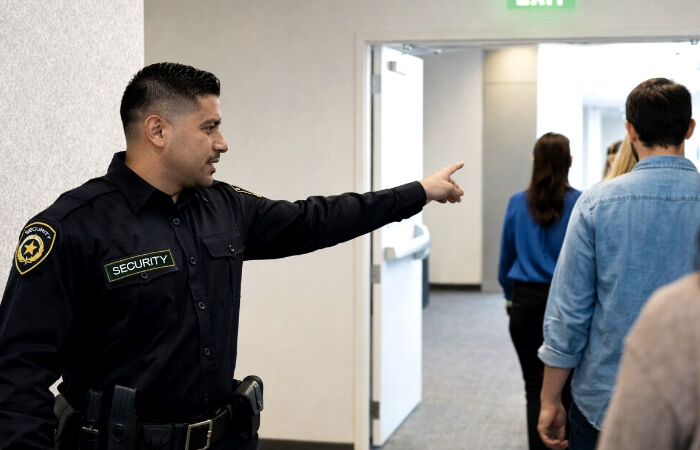
This course is a critical component of training for security officers tasked to safeguard people and property during crises. Students are taught the dynamics of evacuations, the human behaviors that emerge during emergencies, and their role to support orderly, calm, and effective evacuations. Students learn to become key players in risk reduction, incident management, and customer reassurance.
The core of the course is an emphasis on the anticipation of human behavior in an emergency. Students learn to deliver clear, authoritative, and compassionate instructions that are vital to overcome hesitation or confusion among the public. They become proactive leaders in evacuation scenarios to help maintain calm and direct people, which minimizes disruptions and potential harm.
The course focuses on a multitude of factors that contribute to effective evacuation procedures. Situational awareness and preemptive planning ensure students are prepared to recognize hazards, assess threats, and identify critical areas such as emergency exits, refuge zones, and assembly points. They learn to account for special considerations with vulnerable populations, including individuals with disabilities and special needs. They are also prepared to assume communication roles during and after evacuations to provide clear directions, assist emergency services, account for personnel, and manage first aid needs when necessary. Students become reliable sources of information and stability, which enhances your client’s trust in your team during critical moments.
When you have officers trained in these procedures, you reduce your liability, improve safety outcomes, and strengthen the perception of your team as capable and safe in both everyday operations and unexpected emergencies.
